Coin Car Games: Simulator
- 4.3
- Rating
- 5.00M
- Installs
- Free
- Price

 Analysis by App-foxy
I spent time with Coin Car Games: Simulator as a casual car-repair and customization game, and my first impression was that it aims for a relaxed garage experience rather than a demanding racing challenge. The basic appeal is easy to understand: restore vehicles, repair them, change their appearance, and enjoy short car-focused activities without paying to download the game. That makes it approachable for someone who wants a simple automotive game to pick up between other tasks.
It belongs to the simulation category and comes from Celestial Roads LLC. The game has built a sizeable audience, with over five million installs, a 4.3 average from around nineteen thousand ratings, and roughly fifteen hundred written reviews. Those figures suggest that the central loop works for many players, although popularity alone does not guarantee that its controls or presentation will suit everyone.
What interested me most was how the game feels outside the ideal conditions imagined by a store description. A player may be using a smaller phone, playing with one hand, sitting in a noisy room, or taking a quick break with limited attention. In those situations, clarity and forgiving interaction matter just as much as the idea of fixing and painting cars. My opinion is positive overall, but I would not recommend it equally to every type of mobile gamer.
You May Also Like

 Blood Strike: 2.5 Anniversary
Blood Strike’s Loadouts Turn Every Drop Into a Tactical Gamble
A close look at Blood Strike’s custom loadouts: how fast access to signature weapons reshapes its battle royale rhythm, rewards preparation, and narrows the gap between fights.

 Pandora - Music & Podcasts
Pandora’s Music Is Easy to Start, but Harder to Recover
Pandora’s strength is its low-effort path from a seed to a station. Its weak spot is how much confidence it asks you to place in connection, setup, and quiet recovery.

 8 Ball Pool
 Is Built on Rivalries, Rematches, and Routine
A close look at the rivalries, rematches, shared routines, and unanswered safety questions that turn a quick pool match into a persistent mobile community.

 Samsung Music
’s Quiet Strength Is Playing What You Already Own
Its reach comes less from spectacle than from dependable access to a personal library. That simplicity is both the app’s strongest retention engine and its ceiling.

 AccuWeather: Weather Radar
AccuWeather Review: A Quick, Clear Forecast for Everyday Decisions
For everyday plans, the best forecast is the one you can understand quickly. AccuWeather makes rain timing, radar, and local conditions easy to act on, with a few trade-offs.

 Hill Climb Racing
Why Hill Climb Racing Still Turns Crashes Into One More Run
A tiny car, a bumpy hill and one more upgrade: Hill Climb Racing keeps resurfacing because its simple chaos makes every near-miss feel personal.
More From Our News Desk



How the garage experience reads and navigates
I approach the garage as more than a place to tap through car tasks: it is a sequence of choices that asks how you want to spend a short session. In this section, I focus on how the screen’s organization affects that decision-making, especially when you want to return to a task after a pause. The next section looks at how the same experience changes with different hands, surroundings, and sensory needs.
A clear idea with a practical learning curve
The premise is immediately readable. You are not asked to understand a complicated racing league, a deep vehicle-management economy, or a long story before reaching the car-focused activities. The core verbs—restore, customize, repair, and paint—give the game a straightforward identity. I found that helpful because it lets a new player form a mental picture of the experience quickly.
That simplicity is especially useful for people who prefer games with a visible purpose. If a friend told me they wanted a car game but did not want competitive races, I could explain this one in a sentence: it is about working on cars and enjoying the results. The concept is less intimidating than a full driving simulator, and it does not require prior knowledge of real-world mechanics to understand why the next task matters.
Navigation in a game like this depends heavily on whether each action feels logically connected to the vehicle. I paid attention to the difference between knowing what I wanted to do and knowing how to reach it. The strongest moments are the ones where the repair or appearance goal is obvious. The weaker moments are those where a player may need to pause and work out which interaction advances the job rather than merely opening another option.
For a first session, I recommend moving slowly instead of tapping through every prompt. That small habit makes it easier to notice which controls are meant for repairing, which are for appearance changes, and which lead to another car activity. It also reduces the chance of making an unwanted selection when the screen is busy. This is a practical advantage for players who process information more comfortably when they can examine one choice at a time.
Readability matters more than visual spectacle
The game’s subject naturally encourages visual detail: damaged parts, paint choices, and the changing appearance of a vehicle. That can be satisfying, but visual richness can also compete with labels and interactive elements. On a phone, a garage scene may feel comfortable in one orientation and cramped in another, depending on the device and the player’s viewing distance.
I would approach it with the display brightness and text size that already work best for you rather than assuming the game will solve every readability issue. Players who need larger interface elements should test the first few interactions before committing to longer sessions. If a button or instruction requires repeated squinting, the problem is not the player’s understanding of cars; it is simply that a touch interface has limited room.
One useful workflow is to separate decision-making from visual inspection. First identify the task you want to complete, then look at the car and choose the matching action. This is less tiring than scanning the whole screen repeatedly while trying to remember the objective. It also makes the game easier to follow for someone who benefits from predictable routines.
The lack of a complicated simulation structure is a strength here. Compared with realistic driving games, the player is not constantly balancing steering, traffic, speed, and repair management at the same time. Compared with highly competitive racing games, there is less pressure to react instantly to an opponent. That gives the experience a calmer rhythm, although players seeking detailed realism may find it too simplified.
What the rating and platform details mean in practice
The game is free to download, which makes trying it low risk. It is marked for Teen audiences, so parents should treat that label as a reason to review the experience themselves before handing it to a younger child. The game also includes optional purchases ranging from ninety-nine cents to ninety-nine dollars and ninety-nine cents per item. That range is important: the download is free, but the surrounding purchase choices can still matter to a household budget.
I would recommend turning a new player’s attention toward the free portion first and deciding whether the basic repair-and-customization loop is enjoyable before considering any purchase. A paid item should improve convenience or variety for someone who already likes the game; it should not be the reason to discover whether the game is fun at all. This is particularly sensible for families sharing a device.
The current version is 1.0.96, and the game requires Android 8.0 or later. That makes checking the phone’s operating system a sensible first step, especially on an older device. A game can be appealing in principle but still be a poor recommendation if the intended phone cannot run it comfortably.
Motor, sensory, and situational access
I also consider the conditions around the phone, because a relaxed car activity can feel quite different in a quiet room than in a noisy or crowded one. I’ll look at the practical balance between visual attention, touch effort, and the freedom to pause, without assuming that every player uses the same setup. That leads into a closer look at motor, sensory, and situational access.
Why the slower garage focus can help
From a motor perspective, a repair-and-customization game can be easier to approach than a racing title that demands constant steering and rapid corrections. The player’s attention is directed toward the car rather than a track filled with split-second hazards. For someone with limited dexterity, that difference may make the game feel less stressful, particularly during short sessions where the goal is to make progress rather than win a race.
That does not mean every interaction will be comfortable. Touchscreen games still require accurate taps, and repeated selections can be tiring for players with tremors, reduced reach, or difficulty maintaining a steady grip. I would use the device in a stable position rather than holding it loosely in one hand. A stand or a table can reduce the physical effort of supporting the phone while working through the garage actions.
One of my more useful habits was to avoid rushing through customization. When the aim is to paint or alter a car, taking a moment between choices reduces accidental taps. This is a small but meaningful trade-off: slower play may feel less exciting, but it gives players more control. The game’s casual identity supports that approach better than a competitive racer would.
Players who rely on external controls should be cautious about assuming that a controller, keyboard, or switch setup will work exactly as desired. The game is built for mobile play, and I would judge its suitability by testing the actual interaction rather than planning around an unconfirmed control method. If touch accuracy is a major concern, this uncertainty may be enough to favor a game with clearly documented alternative input support.
Visual and auditory comfort
Car games often use color as a reward, and painting is part of this game’s appeal. That creates a possible barrier for players who have difficulty distinguishing certain colors. A person may still enjoy the restoration side while finding paint selection less informative or less satisfying. I would not treat the customization layer as equally accessible to every player, because color-based choices can communicate differently depending on vision.
Screen glare is another everyday issue. Playing near a window or under strong overhead lighting can make dark details and small controls harder to see. A shaded position and a clean screen can make more difference than expected. I found that the game is better suited to deliberate viewing than to a phone held at an awkward angle while walking or traveling.
Audio can affect comfort even when it is not central to the game. Someone playing in a shared room may need to keep the sound low or off, while another player may rely on audio cues as part of the experience. I would test the game at a quiet volume before deciding whether it works well in public or family spaces. A visually understandable activity is more flexible in those contexts than one that depends on constant sound.
For sensory-sensitive players, the best use case is a controlled session: moderate brightness, a quiet environment, and no expectation of finishing quickly. The worst use case is trying to play while multitasking in a crowded place. That distinction is not a criticism of the car theme; it is a reminder that mobile accessibility depends on the setting as much as on the software.
A realistic everyday scenario
Imagine a player waiting for an appointment with ten minutes to spare. They want something more engaging than scrolling but do not want to begin a race that requires uninterrupted concentration. This game fits that moment well. They can focus on a car task, make a few appearance decisions, and stop when the appointment is called. The garage premise gives the session a natural stopping point, which is more convenient than a game built around long competitive matches.
Now change the situation: the same player is on a moving bus, holding a bag, and trying to use the phone with one hand. The recommendation becomes weaker. Small touch targets, movement, glare, and divided attention can turn a relaxed activity into frustrating tapping. In that setting, an audio-led game, a turn-based title with larger controls, or a simpler puzzle may be a better fit.
This is one of the game’s clearest strengths and limitations at once. It is flexible in time, but not necessarily in every physical context. Short sessions are convenient; unstable hand positions are not. I would choose it for a seated break, not as my first choice for commuting while standing.
Who will enjoy it, and who should skip it
I think it suits players who like visible before-and-after progress, car themes without intense racing pressure, and customization as a relaxing activity. It can also work for someone who wants a free starting point and is comfortable deciding later whether optional purchases are worthwhile. The Teen content rating makes it more appropriate to evaluate as a general-audience mobile game for older children and adults rather than automatically treating it as a young child’s title.
I would steer serious driving-simulation fans elsewhere. If your priority is realistic handling, detailed vehicle physics, or competition against other drivers, a dedicated racing or driving simulator will probably offer a deeper experience. This game’s appeal is the garage loop, not the promise of becoming a precise virtual driver.
I would also hesitate to recommend it to anyone who needs guaranteed support for alternative input, strong text enlargement, or highly configurable sensory settings. The game may still be playable, but those needs should be tested directly on the intended device. A title with explicit accessibility controls would be a safer choice when those controls are essential rather than merely helpful.
Where the remaining friction appears
The biggest barrier is the gap between a simple concept and the physical realities of mobile interaction. “Repair and paint a car” sounds easy, but ease depends on the size of the phone, the player’s grip, the lighting, and the clarity of each action. A player with good vision and steady touch may barely notice these factors. Another player may encounter them immediately.
The purchase range is another consideration. Free entry is welcome, but items reaching ninety-nine dollars and ninety-nine cents create a need for careful spending decisions. I would not let a child explore the game unsupervised on a device with unrestricted purchasing. Even adult players benefit from treating optional items as a separate decision rather than an automatic part of progression.
There is also a motivational trade-off. Customizing cars can be satisfying when the player enjoys gradual improvement, but those who need a strong narrative, social competition, or a constant stream of new challenges may lose interest. The game’s focused identity is good for clarity, yet that same focus can feel narrow after the novelty of the garage wears off.
Another practical limitation is that the store summary gives a broad promise rather than explaining the experience in detail. I would therefore judge the game through a short trial: check whether the first repair actions are comfortable, see whether the visual presentation is readable on your phone, and confirm that the pace matches your expectations. That test tells you more than assuming every car game handles the same way.
My inclusive verdict
After using it as a casual simulation game, I see Coin Car Games: Simulator as a friendly option for players who want car restoration and appearance changes without the constant pressure of racing. Its free entry, clear automotive theme, and suitability for short seated sessions give it a practical place on a mobile device. The 4.3 average and audience of more than five million installs also show that the idea has found plenty of interest.
My recommendation comes with conditions. Start with the free experience, check the Android requirement of 8.0 or later, and test the controls in the environment where you actually plan to play. Keep the phone supported if precise tapping is tiring, reduce glare, and take your time with customization rather than treating every action like a race. Those simple adjustments can make the difference between a pleasant garage break and a frustrating one.
For accessibility, I would describe the game as potentially approachable rather than universally accommodating. Its calmer car-work focus may reduce reaction pressure, but touch accuracy, visual detail, color-based customization, and purchase choices can still create barriers. If those issues are manageable for you, I think the game is worth trying. If you need extensive input or display options, or if you want authentic driving depth, another title in the simulation or racing space will likely be the better fit.
In the end, Celestial Roads LLC has made a game with an inviting central idea: take a vehicle, improve it, and enjoy the process. I would recommend it to a friend who likes cars, prefers relaxed mobile sessions, and understands that the experience is lighter than a full driving simulator. The best reason to try it is not realism; it is the satisfying, low-pressure rhythm of making a car feel more like your own.
FAQs for Coin Car Games: Simulator
01What is Coin Car Games: Simulator?
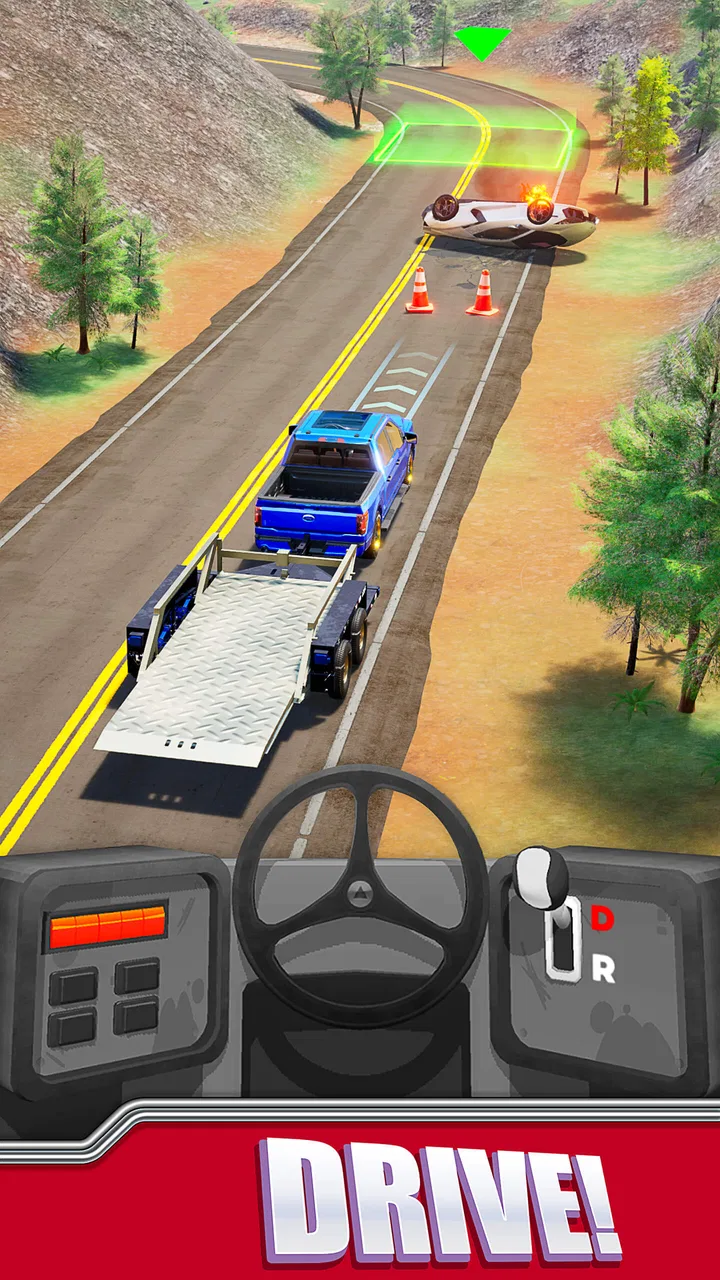
Coin Car Games: Simulator is a casual driving game focused on collecting coins while controlling a vehicle through different courses and challenges. During testing, the gameplay felt easy to understand, making it suitable for short sessions. Players generally need to steer carefully, avoid obstacles, gather as many coins as possible, and use their earnings to improve progress or unlock additional content, depending on the available game mode.
02How do you play Coin Car Games: Simulator?
The main objective is to drive through each level, collect coins, and reach the finish or complete the required challenge without crashing. Controls are designed for mobile screens, so you can usually steer with touch-based controls or on-screen buttons. The game is simple to start, but later stages may require better timing, more accurate movement, and careful planning around obstacles and narrow paths.
03Is Coin Car Games: Simulator free to download and play?
Coin Car Games: Simulator can generally be downloaded for free from the supported mobile app store, although the exact availability may depend on your device and region. As with many free casual games, it may include advertisements, optional purchases, or other monetization features. Before installing, check the store listing for current information about in-app purchases, permissions, supported devices, and any additional download requirements.
04Does Coin Car Games: Simulator require an internet connection?
The basic driving experience may work without a constant internet connection, which is convenient when you want to play during travel or in areas with limited coverage. However, some features can depend on connectivity, including advertisements, updates, online rewards, analytics, or store-related services. It is best to launch the game once while connected and review its behavior before relying on offline play.
05Is Coin Car Games: Simulator suitable for children?
The game uses straightforward driving and coin-collecting mechanics, so it may be accessible to younger players who enjoy casual games. Nevertheless, parents should review the app-store age rating, advertising content, privacy details, and possible in-app purchases before allowing children to play. If the game includes external links or purchases, parental controls and purchase restrictions are recommended for safer use.
Pros
- Simple controls make it easy for beginners to start driving.
- Short races are convenient for quick gaming sessions.
- Car upgrades add a sense of progression over time.
- Colorful visuals give the game a cheerful
- accessible style.
- Offline play is useful when you have no internet connection.
Cons
- Gameplay can become repetitive after several races.
- Some upgrades may require considerable time or in-game currency.
- The driving physics feel more arcade-like than realistic.
- Advertising may interrupt the experience between activities.
- Limited car and track variety can reduce long-term appeal.

Coin Car Games: Simulator
Gallery